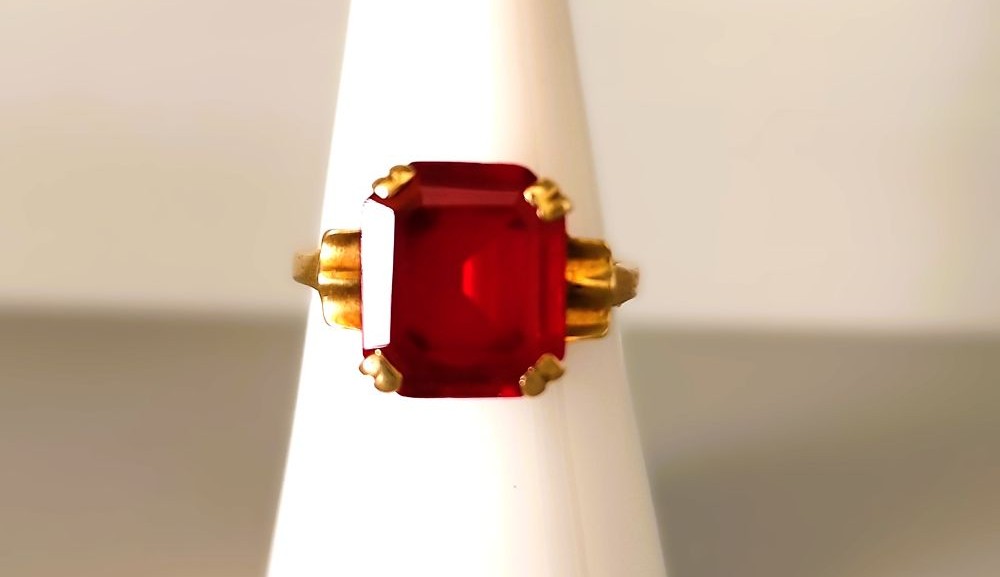
I still remember my grandma’s ring—a yellow gold ruby she wore every day. It wasn’t her engagement ring, but her promise ring from my grandpa, complete with a tiny hand engraving inside. To me, it was huge. Deep red, glowing, and incredibly special.
Years later, my family gathered around the table to sort through her jewelry. By then, I was a jewelry professional, and the questions started immediately: Is this real? Where did it come from? What is it worth?
And of course—everyone was focused on the ring.
As it turns out, the “ruby” was synthetic. (A surprise to many, but synthetic gemstones have been used since the late 1800s.) The ring had an insurance value of about $2,500—but a resale value closer to $250.
Not quite the hidden treasure everyone expected.
But I’ve seen the opposite happen just as often—boxes thought to hold only costume jewelry revealing valuable diamonds or antique pieces worth far more than imagined.
That’s the mystery of heirlooms: you just don’t know until you look.
An estate evaluation brings clarity to those questions. It helps families understand what they have, avoid misunderstandings, and make confident decisions about what comes next.
If you’ve ever wondered what’s really in your jewelry box, it might be time to take a closer look.